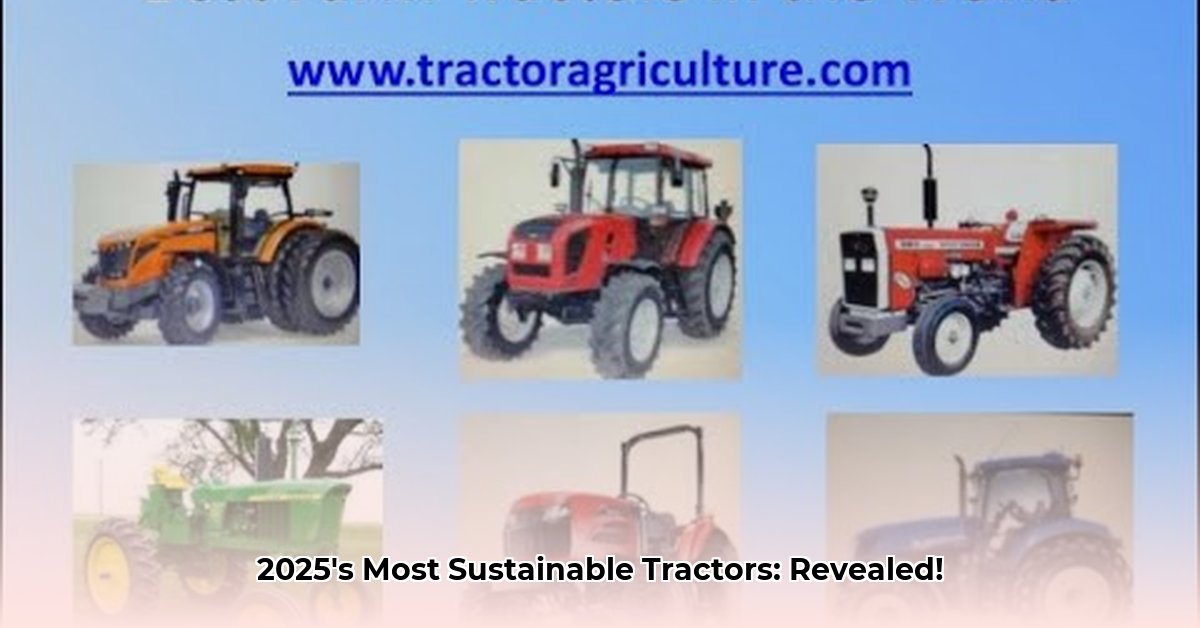
Choosing the right tractor is a significant investment impacting your farm's profitability and environmental footprint. This guide provides a comprehensive overview of reliable tractor brands and actionable steps to guide your decision-making process, emphasizing sustainability in 2025 and beyond.
Choosing the Right Tractor: Key Considerations Beyond Brand Recognition
Selecting a tractor involves more than just brand recognition; it requires a thorough assessment of your farming operation and long-term goals. Several factors influence a tractor's lifespan and operational efficiency. First, identify your primary tasks. Are you primarily involved in plowing, planting, or harvesting? This will significantly narrow your options.
Small farms may benefit from compact tractors, while large-scale operations need powerful machines with advanced features. Consider your terrain as well. Hilly land necessitates a tractor with robust traction and power to prevent accidents.
Maintenance is crucial. What is your maintenance budget? Some tractors require more frequent maintenance than others. Are you comfortable performing routine checks, or do you prefer low-maintenance options? This is a critical factor that often gets overlooked.
Top Tractor Brands: Established Leaders and Emerging Contenders
Kubota, Mahindra, and John Deere consistently rank among the most reliable brands, known for robust construction, readily available parts, and extensive dealer networks. However, Case IH, New Holland, and Massey Ferguson are emerging as strong competitors with fuel-efficient engines and advanced technologies designed to enhance efficiency and minimize environmental impact. Aren't fuel efficiency and lower emissions key factors in sustainable farming practices?
Sustainability: A Cornerstone of Modern Agriculture
Sustainable farming practices are no longer a trend but a necessity. This involves selecting tractors that minimize fuel consumption, emissions, and resource waste. Many manufacturers offer tractors equipped with precision farming technologies such as GPS guidance and variable-rate application (VRA), optimizing resource utilization and minimizing environmental impact. What percentage of farmers are currently using precision agriculture technologies, and what are the observed efficiency gains?
Electric tractors are gaining traction, offering a zero-emission alternative for environmentally conscious farmers. While still relatively nascent, they represent a significant step toward greener agricultural practices.
Your Actionable Plan: A Step-by-Step Guide to Tractor Selection
Follow these steps to make an informed decision aligned with your needs and budget:
Assess Your Needs: Thoroughly evaluate your farming operations, creating a realistic budget. Consider the tasks performed, land conditions, and farm size.
Research Tractor Models: Investigate top-rated brands (Kubota, Mahindra, John Deere, Case IH, New Holland, Massey Ferguson), comparing features, specifications, and sustainability initiatives. Utilize online resources, farm publications, and consultations with other farmers.
Analyze Long-Term Costs: The initial purchase price is only one aspect. Factor in fuel efficiency, maintenance, and potential repairs throughout the tractor's lifespan. A seemingly inexpensive tractor might prove more costly in the long run.
Consult Experts: Seek advice from fellow farmers and agricultural professionals. Their firsthand experiences provide valuable insights and can prevent costly mistakes. Their knowledge offers invaluable guidance on minimizing long-term expenses.
Conduct a Test Drive (If Feasible): Ideally, test drive different models in your fields. This allows you to assess how the tractor handles and performs in your specific environment.
Navigating the Risks: Advanced Technology and Potential Challenges
While advanced technologies enhance tractor capabilities, they also introduce potential risks:
| Technology Feature | Likelihood of Failure | Impact of Failure | Mitigation Strategies |
|---|---|---|---|
| Advanced Electronics | Moderate | High | Regular software updates, redundant systems, preventative maintenance. |
| Precision Farming Systems | Low | Moderate | Regular calibration, GPS signal monitoring, operator training. |
| Sustainable Fuel Systems | Low | Moderate | High-quality fuel, reliable supply, exploration of alternative fuels. |
| Engine and Transmission | Moderate | High | Regular maintenance, quality parts, skilled mechanics. |
The Future of Sustainable Farming: Integrating Technology and Environmental Stewardship
Selecting a reliable tractor is intrinsically linked to building a sustainable farm. By carefully considering your needs, comparing models, and prioritizing long-term efficiency, you can choose a machine that optimizes farm output while minimizing environmental impact. The future of agriculture hinges on smart decisions – make yours today. What innovations in sustainable farming technologies do you predict will be dominant within the next five years?
Comparing Tractor Brands for Long-Term Environmental Impact: A Deeper Dive
Key Takeaways:
- Kubota, Mahindra, and John Deere consistently demonstrate high reliability.
- The optimal brand depends on your farm's size and operations.
- Comparing environmental impact requires examining fuel efficiency and emissions data, often lacking in public resources.
- Long-term maintenance costs and alignment with sustainability goals are crucial.
- Future regulations heavily influence optimal tractor choices.
Balancing Reliability and Sustainability: A Strategic Approach
Tractor selection is a critical decision, impacting both profitability and environmental responsibility. Reliable performance and sustainable farming practices must be balanced. This necessitates a long-term perspective beyond immediate costs.
Leading Contenders: Close Examination of Kubota, Mahindra, and John Deere
These brands consistently rank highly for reliability; however, a comprehensive evaluation necessitates examining their sustainability performance.
- Kubota: Known for compact tractors ideal for smaller operations, often excelling in fuel efficiency relative to their size.
- Mahindra: Offers a wider range of models, including larger tractors suitable for larger operations, with competitive pricing.
- John Deere: A major player with a broad selection, strong dealer support, and higher initial investment costs.
Environmental Impact Assessment: The Data Gap
While all three brands emphasize fuel efficiency improvements, readily available data comprehensively comparing their environmental impact across their entire product line is limited. More transparent reporting from manufacturers is crucial. How can we improve access to comprehensive life-cycle assessment data for agricultural equipment?
A Structured Approach to Tractor Selection
- Define Operational Needs: Precisely define your farm operations and the tasks your tractor must perform.
- Research Fuel Efficiency: Look beyond horsepower; prioritizing independent verification of fuel consumption is vital.
- Investigate Emission Regulations: Familiarize yourself with current and upcoming environmental regulations.
- Account for Maintenance: Factor in anticipated repair costs and parts availability throughout the lifespan.
- Evaluate Total Cost of Ownership: Calculate the total cost including fuel, maintenance, and potential repairs.
- Assess Sustainability Features: Prioritize tractors with features that minimize environmental impact, such as precision agriculture technologies.
Risk Assessment Summary
| Trait | Kubota | Mahindra | John Deere |
|---|---|---|---|
| Reliability Risk | Low | Low | Low |
| Maintenance Cost Risk | Medium | Medium | High |
| Environmental Impact Risk | Medium | Medium | Medium |
| Parts Availability Risk | Low | Low | Low |
The Future of Sustainable Agricultural Equipment
Future environmental regulations will heavily influence tractor selection. Choosing a brand dedicated to fuel-efficient technologies and sustainable manufacturing practices is crucial for long-term success. Sustainable agriculture is not merely about resource reduction but encompasses smarter and more efficient utilization.